Optimizing Message Delivery Routing for Heterogeneous Mobile Endpoints
Automated capability discovery is required to prevent delivery failures and latency when routing between rich communication protocols and legacy SMS.
The Routing Dilemma in Heterogeneous Messaging
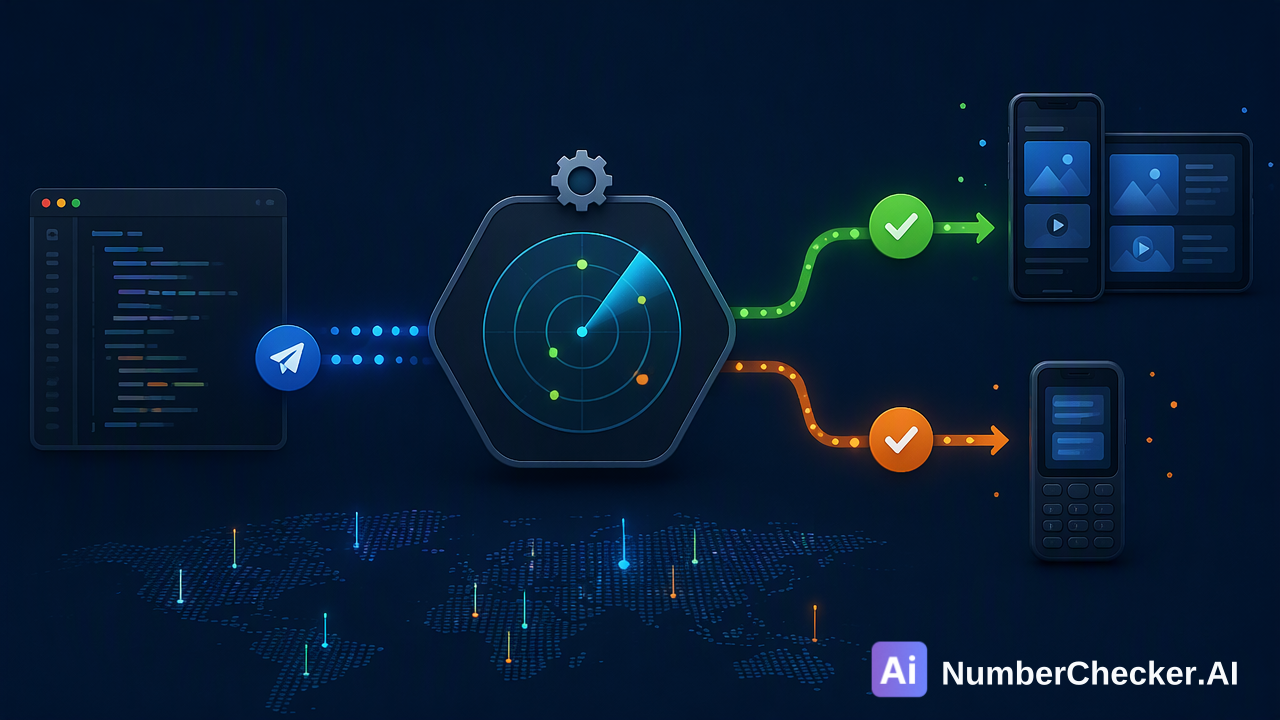
Imagine you are managing a notification system for a global logistics firm. You have a list of 50,000 phone numbers. Your goal is to send a time-sensitive delivery update. You have two primary channels: a rich messaging platform that supports high-resolution images, interactive buttons, and read receipts, and the legacy SMS gateway, which is reliable but limited to plain text and carries a higher per-message cost.
If you route all traffic through the rich messaging platform, you will encounter delivery failures for users who do not have the application installed or whose devices are incompatible. If you route everything through SMS, you lose the engagement benefits of rich media and incur unnecessary costs for users who could have received a more informative message via the rich channel.
This is the classic "heterogeneous endpoint" problem. Without a pre-flight check to determine the capabilities of each recipient, your routing logic is essentially guessing. This leads to increased latency, as the system waits for timeouts on failed rich-media attempts before falling back to SMS, and higher operational overhead due to failed delivery logs.
Diagnosing the Failure Pattern
In a naive implementation, a developer might attempt to send a message via the rich API and catch the exception to trigger an SMS fallback. While this seems logical, it creates a significant performance bottleneck.
# Hypothetical naive implementation
def send_notification(user_phone, message_payload):
    try:
        # Attempt rich delivery
        rich_api.send(user_phone, message_payload)
    except DeliveryFailedError:
        # Fallback to SMS
        sms_gateway.send(user_phone, message_payload)
The issue here is the "wait-and-see" approach. If the rich API takes five seconds to time out on a non-existent account, your notification queue will stall. At scale, this latency compounds, causing your delivery window to drift significantly. Furthermore, this approach treats every failure as a technical error, masking the reality that some numbers simply do not belong on the rich platform.
Implementing Automated Capability Discovery
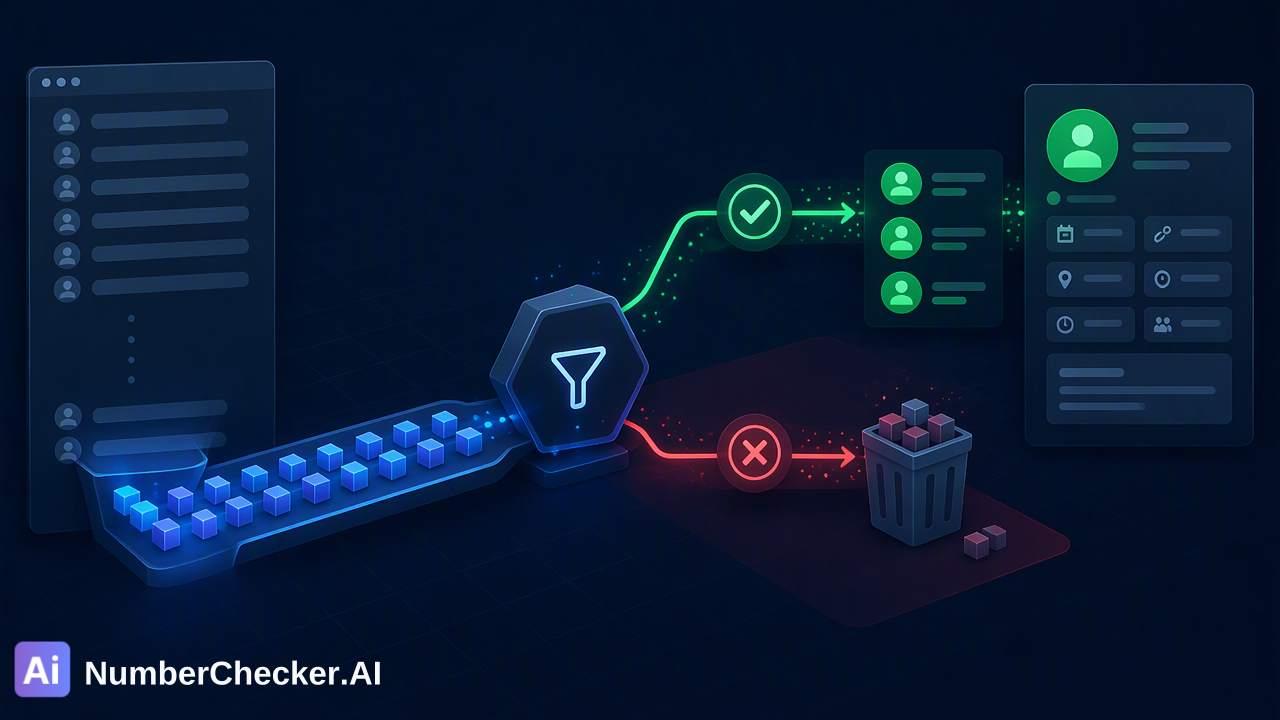
To optimize this, you must decouple the discovery phase from the delivery phase. By using a platform registration signal, you can segment your audience into "Rich-Capable" and "Legacy-Only" buckets before the campaign begins.
The workflow involves three distinct stages: normalization, registration checking, and routing.
1. Normalization
Before checking any platform, ensure your data is clean. Use a tool to normalize phone numbers to E.164 format. This removes duplicates and ensures that the country code is correctly associated with the number, preventing false negatives during the registration check.
2. Registration Signal Retrieval
Instead of sending a message, you query the registration status of the phone number against the target platform. This is an asynchronous task. You upload your list (CSV or TXT) to the platform’s API. The system processes the list and returns a signal indicating whether the number is currently registered on that platform.
// Conceptual structure of a registration signal response
{
  "phone": "+1234567890",
  "is_registered": true,
  "platform": "whatsapp",
  "timestamp": "2023-10-27T10:00:00Z"
}
3. Routing Logic
With the registration signal in hand, your routing logic becomes deterministic rather than reactive.
# Optimized routing logic
def route_notification(user_phone, registration_data, message_payload):
    if registration_data.get("is_registered"):
        rich_api.send(user_phone, message_payload)
    else:
        sms_gateway.send(user_phone, message_payload)
Edge Cases and Trade-offs
While this approach significantly improves delivery efficiency, it is not without trade-offs.
The "Stale Signal" Problem
A registration signal is a snapshot in time. A user might uninstall an application or switch devices shortly after you perform your check. Therefore, you should treat the registration signal as a prioritization hint rather than a permanent state. Always maintain a secondary fallback mechanism in your delivery layer for the rare cases where the signal is outdated.
Data Privacy and Consent
Registration signals confirm that a number is associated with a specific platform, but they do not grant permission to contact that user. You must ensure that your list has already been vetted for express and informed consent. The registration check is a technical routing tool, not a compliance tool.
Platform-Specific Constraints
Different platforms offer different levels of signal depth. For example, some products provide basic registration signals, while others offer activity signals (e.g., "last seen" context).
A common mistake is to assume that a "registered" signal implies the user is active. If you are sending a critical notification, you might choose to prioritize users who have been active within the last 30 days. However, be aware that activity signals are platform-specific and do not guarantee that the user will read your message.
Implementation Strategy
For high-volume campaigns, do not attempt to perform these checks in real-time as the notification is triggered. Instead, adopt a batch-processing architecture:
- Ingestion: Collect the list of recipients.
- Cleaning: Run the list through a number cleaner to normalize and remove invalid entries.
- Enrichment: Submit the cleaned list to the registration checker via an asynchronous REST API task.
- Segmentation: Once the task completes, download the results and segment your database into
rich_capableandsms_onlygroups. - Execution: Trigger your notification campaign using the segmented lists.
This architecture ensures that your delivery engine is never waiting on an external API during the critical path of sending a message.
Key Takeaways
- Decouple Discovery from Delivery: Never use delivery failure as a discovery mechanism. It introduces unacceptable latency and operational noise.
- Normalize First: Always normalize phone numbers to E.164 before running any checks to ensure accuracy.
- Use Asynchronous Workflows: For large lists, utilize batch-processing APIs to handle registration checks, and process the results as a background task.
- Signals are Hints, Not Guarantees: A registration signal confirms current platform presence but does not guarantee message delivery or user engagement.
- Respect Consent: Technical reachability does not replace the legal requirement for prior express consent. Always ensure your contact lists are compliant before performing any routing checks.
About the author
- https://numberchecker.ai Verify phone numbers & emails in bulk. Upload your list, remove invalid contacts, boost deliverability.
Comments
Join the discussionNo comments yet. Be the first to comment.