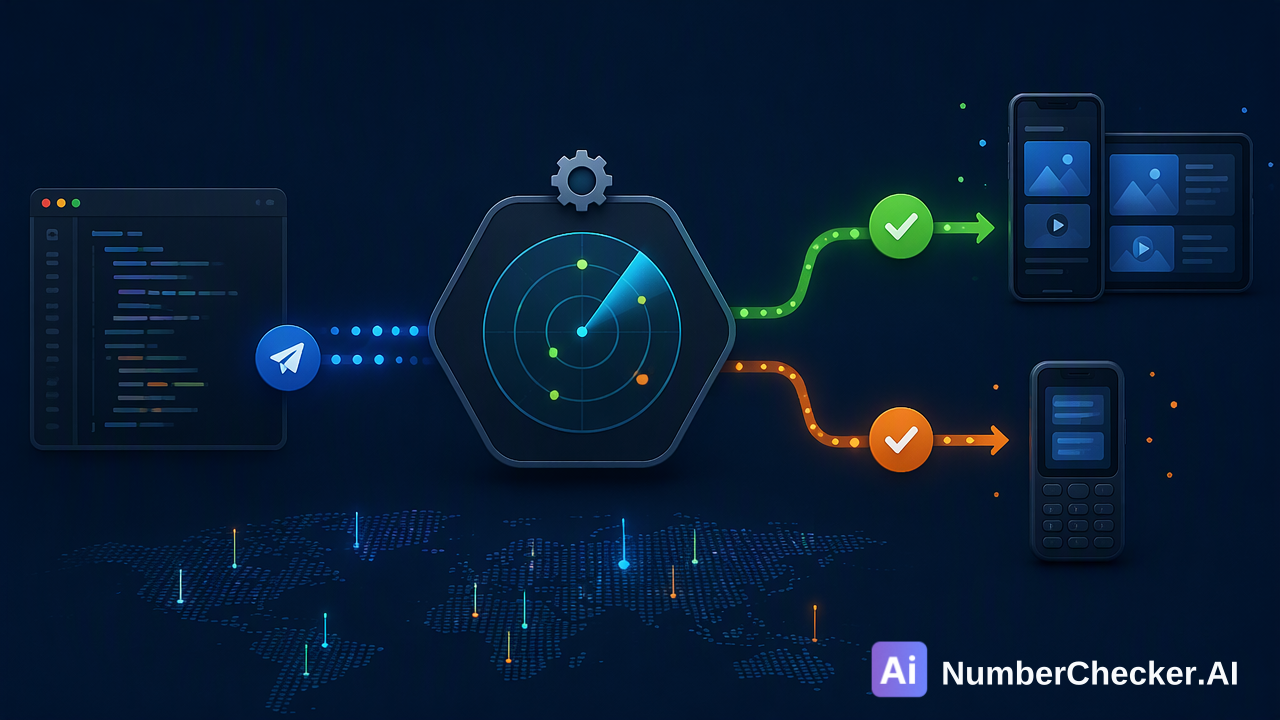
Architecting High-Throughput Username Validation Pipelines
Distinguishing between simple existence checks and deep profile metadata extraction is critical for building resilient identity verification systems.
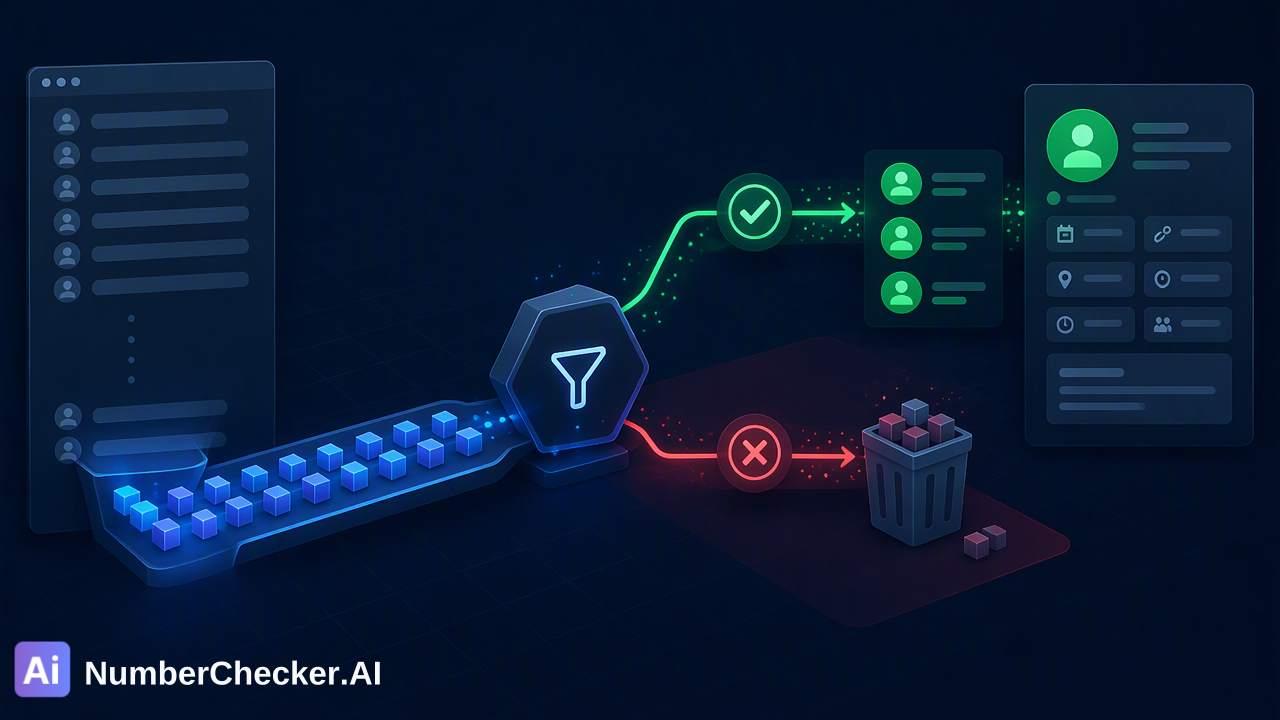
When building identity verification systems or managing large-scale user databases, the ability to distinguish between a username that exists and one that is active is a common architectural challenge. For a developer tasked with processing 10,000 potential handles, the naive approach—looping through an API one by one—is rarely the correct path. Instead, the architecture must balance throughput, data depth, and the constraints of the target platform.
The core engineering decision lies in choosing between a lightweight existence check and a deep profile metadata extraction. This choice dictates your infrastructure requirements, your error-handling logic, and the overall latency of your pipeline.
The Existence Check: High-Throughput Filtering
The primary goal of an existence check is to determine if a handle is registered on a specific platform. This is a binary operation: the username is either present or it is not.
In a high-throughput scenario, you should treat this as a batch-processing task rather than a real-time request-response cycle. By utilizing asynchronous REST API workflows, you can offload the heavy lifting to the platform’s infrastructure. Instead of managing local concurrency, you upload a file—typically in CSV or TXT format—containing your list of handles.
Trade-offs
- Pros: This approach is optimized for volume. Because the platform handles the execution, your local system is freed from managing complex retry logic or maintaining long-lived connections. The result is typically delivered as a downloadable file, which simplifies the integration into downstream data pipelines.
- Cons: You gain zero context. You will know if the account exists, but you will not know if it is dormant, recently active, or what its profile metadata looks like. If your business logic requires prioritizing "active" users over "registered" ones, this method will force you to perform a secondary, more expensive lookup later.
The Enrichment Pipeline: Deep Metadata Extraction
When your requirements move beyond simple existence—for example, if you need to identify account identifiers, membership status, or recent activity signals—you must shift to an enrichment-focused architecture. This is a significantly more resource-intensive process.
In this model, the pipeline is not just checking for a registration signal; it is pulling specific profile attributes. This often involves a multi-stage process: first, filtering the list for valid registrations, and second, querying those specific hits for metadata.
Trade-offs
- Pros: You receive actionable intelligence. Knowing the "last seen" context or membership status allows you to segment your 10,000 handles into high-value and low-value targets. This is essential for systems where the quality of the data is more important than the quantity.
- Cons: This approach is inherently slower and more complex. Enrichment queries often involve higher latency per record. Furthermore, you must be mindful of the platform’s concurrency and timeout behaviors. If you attempt to pull deep metadata for all 10,000 records simultaneously, you risk hitting timeouts or triggering rate-limiting mechanisms defined by the platform’s API documentation.
Comparison of Architectural Approaches
| Feature | Existence Check | Enrichment Pipeline |
|---|---|---|
| Primary Output | Binary (Registered/Not) | Metadata (Activity, Status, etc.) |
| Throughput | High (Batch-optimized) | Moderate (Requires segmentation) |
| Complexity | Low (Single-pass) | High (Multi-stage) |
| Best Use Case | Cleaning lists, initial filtering | Prioritization, user segmentation |
Engineering Decision: A Hypothetical Scenario
Consider a hypothetical scenario where you are cleaning a database of 10,000 usernames to identify which accounts are currently active on a messaging platform.
If you choose the enrichment route immediately, you might find that 40% of your list consists of non-existent handles. You have effectively wasted 4,000 expensive enrichment calls on data that could have been discarded with a simple, low-cost existence check.
The optimal architecture is a two-tier pipeline:
- Tier 1 (The Filter): Use a bulk existence check to prune the list. This removes non-existent handles and reduces your dataset to only those that are registered.
- Tier 2 (The Enrichment): Take the output from Tier 1 and pass it through an enrichment process to extract activity signals or profile metadata.
Edge Cases and Limitations
A common pitfall is failing to account for the "normalization" phase. Before uploading any list, ensure your input data is clean. For phone-number-based handles, this means normalizing to E.164 format and removing duplicates. For username-based handles, ensure you have stripped any platform-specific prefixes or formatting that might cause a false negative during the check.
Another limitation is the "stale data" problem. A registration signal is a point-in-time observation. If your pipeline runs over several hours, the state of the platform may change. Always design your system to handle the possibility that a user might have deleted their account or changed their handle between the time you initiated the batch and the time you received the results.
When to Choose Which Path
- Choose the Existence Check when: You are performing bulk list cleaning, preparing data for a CRM, or simply need to verify that a list of handles is valid before proceeding with other operations. It is the most efficient way to handle large volumes of data without incurring unnecessary latency.
- Choose the Enrichment Pipeline when: You are building a system that requires decision-making based on user behavior. If your application needs to distinguish between a dormant account and an active one, the extra cost and time associated with enrichment are justified.
Regardless of the path chosen, always consult the current API documentation for the specific platform you are targeting. Concurrency limits, timeout thresholds, and supported input formats are subject to change, and building your pipeline to be modular—allowing you to swap out the validation logic without rewriting your entire data processing layer—is the hallmark of a resilient identity verification system.
About the author
- https://numberchecker.ai Verify phone numbers & emails in bulk. Upload your list, remove invalid contacts, boost deliverability.
Comments
Join the discussionNo comments yet. Be the first to comment.